You’ve probably seen both terms thrown around in the same ad, sometimes in the same sentence. GLP-1. Peptide therapy. Ozempic. Tesamorelin. It sounds like two versions of the same thing, but they’re not, and picking the wrong one wastes months and money you don’t want to lose twice.
Maybe you’re already on a GLP-1, and the scale has stopped moving. Maybe you’ve noticed your clothes fit looser, but your arms look softer, not tighter. Or maybe you haven’t started anything yet and just want to know which one actually fits your body before you commit to either.
That confusion is normal. Peptide therapy and GLP-1 medications get lumped together constantly because, technically, GLP-1 is a peptide too. But how they work in your body, and what they’re actually built to do, are two different conversations.
The Quick Answer: What’s the Real Difference?
GLP-1 medications work by quieting your appetite. They mimic a hormone your gut already makes, slow down digestion, and help you feel full on less food. Peptide therapy, specifically Tesamorelin and Ipamorelin, works differently. It nudges your body’s own growth hormone signaling to burn fat, particularly the stubborn kind around your midsection, while protecting the muscle you already have. Both can help you lose fat. They just get there through completely different doors.
If your main struggle is appetite, cravings, or portion control, semaglutide or tirzepatide-based programs tend to be the stronger starting point. If you’re already active, want to protect lean muscle, or you’re looking for a way to maintain results after finishing a GLP-1 program, peptide therapy usually makes more sense.
What Is a GLP-1 Medication?
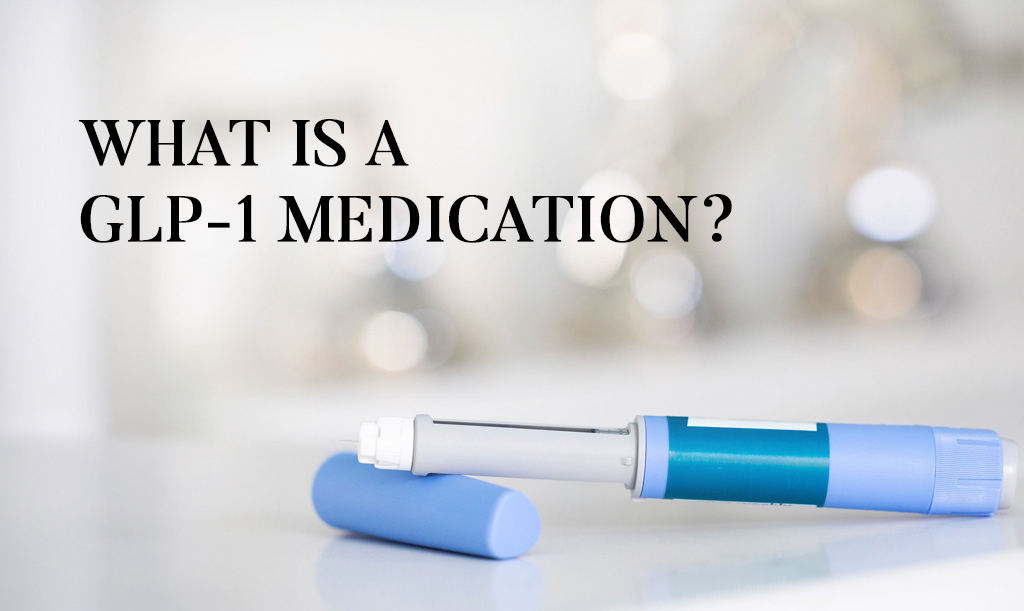
GLP-1 stands for glucagon-like peptide-1, a hormone your gut releases naturally after you eat. GLP-1 medications are synthetic versions of that hormone, given as an injection, designed to do the same job but stronger and longer. The result is that you feel full sooner, stay full longer, and naturally eat less without white-knuckling every meal.
How GLP-1 Medications Work in the Body
Here’s the part most explanations skip. GLP-1 doesn’t just kill your appetite. It slows down how fast food leaves your stomach, which is why some people describe finally getting quiet in their head around food, no more constant thinking about the next meal or snack. That mental quiet is honestly one of the bigger wins patients mention, even more than the number on the scale.
It also nudges your pancreas to release insulin more efficiently, which is part of why these medications were originally built for managing blood sugar, not weight loss.
Who GLP-1 Tends to Fit Best
GLP-1 is generally the stronger starting point if you have a meaningful amount of weight to lose or you’re dealing with appetite that feels genuinely out of your control, not just a lack of willpower. Broadly speaking, providers look at your overall health picture, not just a number on a scale, to figure out if this is a fit. At 901 Aesthetics, our GLP-1 with L-Carnitine program is built around exactly that kind of individual evaluation, not a one-size-fits-all shot.
What Is Peptide Therapy?
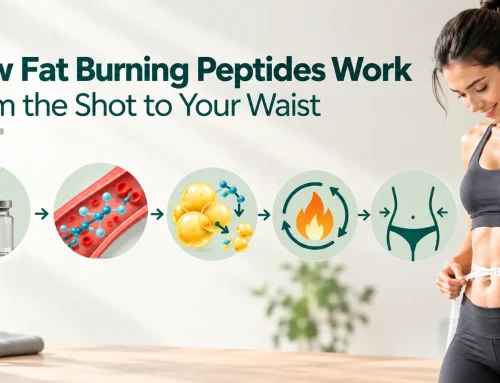
Peptide therapy, as we use it here, means Tesamorelin combined with Ipamorelin. These two lab-compounded amino acid chains signal your pituitary gland to release more of your own growth hormone. That’s the whole idea. Instead of overriding your appetite, it works with a system your body already has.
One thing worth saying plainly. These are compounded peptides, not FDA-approved medications the way semaglutide and tirzepatide are. That doesn’t mean they’re unsafe when properly supervised, but it does mean the regulatory path is different, and you deserve to know that before you start.
How Tesamorelin and Ipamorelin Work Differently
Tesamorelin is particularly good at targeting visceral fat, the fat that sits deeper around your organs rather than just under the skin. Ipamorelin works alongside it to support that same growth hormone release. Some patients do notice a slight increase in appetite from Tesamorelin, which your provider will walk you through before you start. The muscle preservation piece is where this really separates itself from a straight appetite-suppression approach. Growth hormone plays a direct role in maintaining lean tissue, so as the fat comes off, your body isn’t cannibalizing muscle to get there.
What Self-Injecting Peptide Therapy Actually Involves
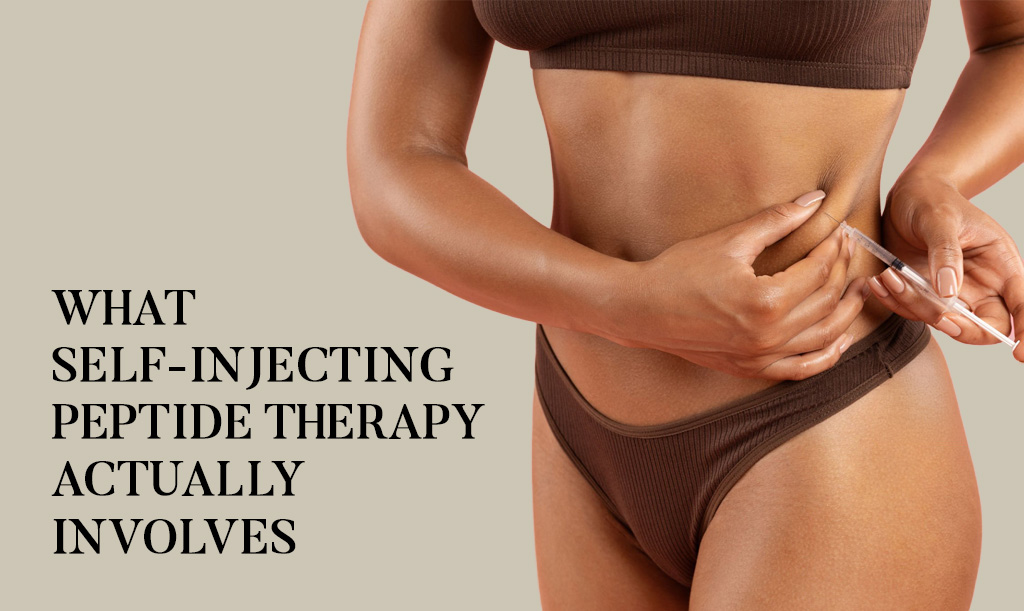
You’ll be injecting this yourself at home, which sounds more intimidating than it actually is once you’ve done it a few times. The typical rhythm is nightly for five days, then two days off, timed about 30 to 60 minutes before bed since your body naturally releases growth hormone while you sleep. Our team walks you through the injection technique in the clinic first, so you’re not figuring out needle angles alone on night one.
GLP-1 vs Peptide Therapy: A Side-by-Side Look
Sometimes the clearest way to see the difference is just to lay it out.
| GLP-1 (with L-Carnitine) | Peptide Therapy (Tesamorelin + Ipamorelin) | |
|---|---|---|
| How it works | Suppresses appetite, slows digestion | Boosts your own growth hormone signaling |
| FDA status | FDA-approved medication class | Compounded, not FDA-approved |
| Speed of results | Appetite changes often felt within weeks | Energy and sleep shift in 3 to 4 weeks, fat reduction in 8 to 12 weeks |
| Muscle impact | Can include some lean mass loss without support | Designed to protect and support lean muscle |
| How it’s taken | Weekly injection | Self-injected nightly, cycled 5 days on, 2 off |
| Best fit for | Appetite-driven weight loss, larger amount to lose | Body composition, muscle preservation, post-GLP-1 maintenance |
Neither one is the better medication overall. They’re built for different jobs.
Does Peptide Therapy Cause Muscle Loss Like GLP-1 Can?
No, and this is genuinely one of the most common reasons people come to us after starting on a GLP-1 alone. Rapid weight loss from appetite suppression can pull from muscle as well as fat, especially without enough protein or resistance training built into the plan alongside it.
Peptide therapy takes a different route entirely. Because Tesamorelin and Ipamorelin work through growth hormone signaling, muscle preservation isn’t an afterthought. It’s part of the mechanism. That’s exactly why some patients notice their weight loss looks different depending on which path they take. Two people can lose the same ten pounds and end up looking completely different, depending on how much of that ten pounds came from muscle versus fat.
Can You Switch From GLP-1 to Peptide Therapy?
Yes, and it’s actually one of the more common conversations we have. You reach your goal weight, or you’re close to it, and you’re wondering what maintenance looks like once you’re no longer suppressing your appetite with medication.
This is where peptide therapy tends to step in. Instead of stopping treatment altogether and hoping your habits hold, transitioning to Tesamorelin and Ipamorelin gives your body ongoing support for muscle and metabolism while you settle into your new normal. We see this often enough that our peptide protocol is specifically built with that transition in mind, not just for people starting fresh.
What Blood Work Do You Need Before Starting Either One?
Every program here starts with lab work, not a guess. For GLP-1, that generally means a look at your metabolic health, things like blood sugar and overall organ function, to confirm it’s a safe fit for your body.
For peptide therapy, we’re also checking hormone-related markers relevant to how your body responds to growth hormone signaling. Depending on how long you stay on a peptide cycle, we’ll recheck certain labs before starting another round, just to make sure everything is tracking the way it should. None of this is meant to slow you down. It’s meant to make sure the plan actually fits your body instead of a generic template.
Which One Fits You?
If your biggest obstacle is appetite you can’t seem to control no matter how disciplined you are, GLP-1 is usually the stronger first move. If you’re already active, lifting weights or staying consistent with movement, and your priority is losing fat without sacrificing the muscle you’ve built, peptide therapy tends to fit better.
If you’ve already had success on a GLP-1 and you’re wondering what comes next, that’s often exactly where peptide therapy picks up the thread. Not sure which column you fall into? A consultation with our team can settle it in one visit.

How 901 Aesthetics Builds Your Weight-Loss Plan
Every plan here starts the same way, with a real conversation, not a form you fill out and forget. Our team, led by Lauren McCann, CRNA, reviews your health history and your goals before anything gets prescribed.
We serve clients throughout Germantown, East Memphis, Collierville, and the surrounding areas, and we’ve built both our GLP-1 program and our Fat Burning Peptide Therapy around the same idea. Your plan should match your body, not the other way around. If you’re weighing your options for medical weight loss in Germantown, that individualized approach is exactly what separates a plan that works from one you quietly abandon in three months. Ready to talk it through? Call (901) 221-1256 or book your consultation online.
Ready to Find Out Which Path Fits Your Body?
You came into this article with two confusing terms and a decision to make. Now you know they’re not competing for the same job. One quiets your appetite. The other protects what you’ve already built while helping your body burn fat more efficiently. Your body isn’t the same as the next person’s, and neither should your plan be. Book a consultation and let’s figure out which path actually fits yours.
Share This Story, Choose Your Platform!
Related Posts