The jeans still button at the hips. The waistband is where the fight is. Bread is gone from the weeknight menu, the evening walks happen, and the scale has sat on the same number since spring while the belly keeps rounding out. Then someone at the gym says two words, fat burning peptides. Now you want to know whether the idea stands up before a single dollar leaves your account.
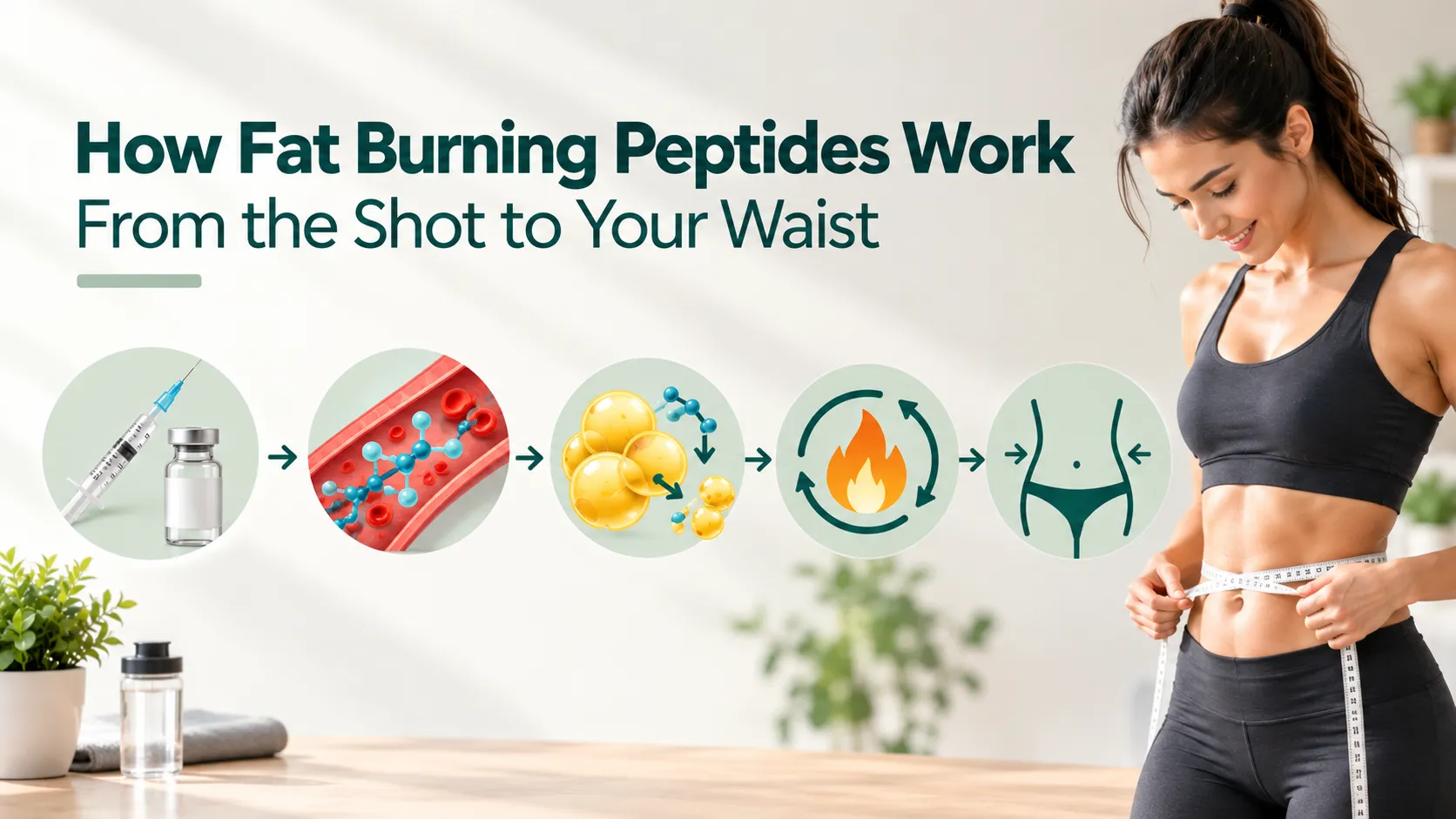
Understanding how fat burning peptides work settles that question quickly. The process starts in the brain, peaks during sleep, passes through the liver and ends at one particular kind of belly fat that diets barely touch.
None of it is mysterious. Once the chain is clear, the ads that oversell it are easy to spot, along with the parts of the result that depend on you.
What Fat Burning Peptide Therapy Is in One Minute
Fat burning peptide therapy pairs two injected peptides, tesamorelin and ipamorelin, that signal the pituitary gland to release more of the body’s own growth hormone. Growth hormone then instructs fat cells to empty their stores. The deep fat wrapped around the organs responds first.
Doctors call this class growth hormone secretagogues. The name means exactly what it sounds like: substances that make the body secrete more growth hormone. “Fat burning” is the label the market settled on. It sells, but it hides the most important detail, which is that your own glands do the work.
GLP-1 drugs such as Ozempic run on a separate system. They shut appetite down. Peptides leave hunger largely alone and act through hormones. That difference explains why people who stall on a GLP-1 look at them next. We cover the side-by-side in our post on how peptides and GLP-1 medications compare. This page stays with the peptides.
How Do Fat Burning Peptides Work After the Nightly Shot?
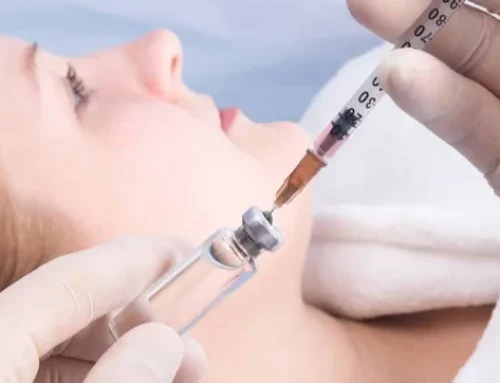
The injection goes in at home at bedtime, after we’ve trained you on the technique in our clinic. Four events follow in a fixed order, three of them while you’re asleep.
- The peptide reaches the pituitary. This pea-sized gland under the brain controls growth hormone output. With age, its release button gets stiff. The peptide presses it.
- A growth hormone pulse lands in early sleep. The body releases its largest growth hormone burst in the first block of deep sleep every night. The shot adds to that natural wave instead of working against it.
- The liver answers with IGF-1. Growth hormone travels to the liver, which produces IGF-1, a messenger that carries the order out to muscle and fat. IGF-1 also shows up on a blood test, so it gives us hard proof the peptides are reaching their target.
- Fat cells release their stores. Growth hormone tells fat cells to break stored fat down and push it into the bloodstream as fuel. Visceral fat answers first, because its cells react to fat-releasing hormones faster than the fat under the skin.
Releasing fat and burning it are two separate steps. Once fat leaves the cell, muscle has to use it as fuel. A body that sits through the evening stores a good share of it all over again. A twenty-minute walk after dinner or a short strength session the next morning gives that freed fat a destination. Every peptide plan we write includes daily movement for exactly this reason.
Timing around food matters just as much. A meal raises insulin, and insulin flattens the growth hormone pulse. A late snack blunts the shot it sits next to, so dinner needs to be finished two to three hours before the injection.
Tesamorelin and Ipamorelin Pull Two Different Switches
The pituitary has two separate ways to release growth hormone. That fact is the reason the protocol uses two peptides instead of a bigger dose of one.
| Protocol Factor | Tesamorelin | Ipamorelin |
|---|---|---|
| Switch it pulls | The brain’s growth hormone “go” signal | A second route through the hunger hormone receptor |
| Main job in the protocol | Deep belly fat | Sleep, recovery, steadier pulses |
| Research behind it | Large placebo-controlled trials | Smaller, mostly early studies |
| FDA status | Approved as Egrifta for HIV-related belly fat only | Not FDA-approved |
Tesamorelin is a copy of the natural hormone the brain uses to start growth hormone release. It holds nearly all of the published research and carries the belly fat work.
Ipamorelin enters through a side door, the receptor for ghrelin, the hormone behind hunger pangs. That same receptor triggers growth hormone release as well. Clients feel ipamorelin first, as deeper and more continuous sleep. It also leaves cortisol, the main stress hormone, out of the picture. Older growth hormone boosters pushed cortisol up along with everything else, and high cortisol feeds the exact belly fat they were meant to shrink.
CJC-1295 shows up in place of tesamorelin at several clinics. We use tesamorelin because its record on cutting fat while protecting muscle is stronger. In practice, that pairing is how fat burning peptides work in our program: tesamorelin targets the belly, and ipamorelin gives it better nights to work with.
Why Your Waist Shrinks Before the Scale Moves
In the main tesamorelin trial, published in the New England Journal of Medicine in 2007, visceral fat dropped about 15% over 26 weeks. The placebo group gained about 5%. Body mass index barely shifted in either group. That gap between belly fat and body weight is the single most useful fact about this treatment.
Visceral fat sits behind the stomach muscles and packs around the liver and intestines. It is the reason a belly feels firm and round instead of soft. Subcutaneous fat, the layer you pinch, sits above the muscle and barely reacts to growth hormone.
Visceral fat accumulates after 40 for two reasons. Growth hormone output falls every decade, slowly enough that nobody feels it go. In women, falling estrogen during menopause redirects new fat from the hips to the waist. Plenty of people gain no weight at all during those years and still move up a belt size.
The scale is the wrong tool for tracking this. Three inches of visceral fat weighs only a pound or two. Any muscle you keep along the way offsets even that. A tape measure gives the accurate reading. Measure at the navel on day one, standing relaxed with no breath held, then repeat every two weeks.
Growth hormone also protects lean muscle while the body draws on fat. That point carries the most weight for anyone coming off a GLP-1. The comparison post linked above covers it in full.
Your Own Growth Hormone Is Different From Injected HGH
A gym friend asks whether peptides are basically steroids. Fair concern. The answer is no. Steroids are synthetic testosterone, a different hormone entirely. These peptides contain no hormone. They instruct the pituitary to make its own growth hormone. The bodybuilders who ran into trouble with growth hormone in the 1990s and 2000s injected the finished hormone directly, in large amounts, with nobody checking their blood.
The distinction matters for safety. The body keeps a brake on growth hormone. Once levels climb far enough, the brain releases a second hormone that tells the pituitary to stop. Peptides operate inside that brake. Injected HGH (human growth hormone) bypasses it and floods the system regardless of what the brain wants. That bypass is where HGH’s extra risk comes from.
We track this in the blood as well. IGF-1 shows how hard the peptides are pushing. Our target keeps it inside the normal range for your age. A high reading tells us to scale back weeks before any symptom would appear. Peptides also have a place in sports medicine. Our post on how peptides help with tendon and muscle repair covers that side for anyone who trains hard.
Each Side Effect Has a Cause You Can Trace
Every common side effect of these peptides traces back to something growth hormone does in the body on an ordinary day. Knowing the cause makes each one easier to recognize early. Redness or itching at the injection site also shows up. Moving the shot clockwise around the navel each night, so the same patch never takes two doses in a row, keeps it under control. An ice cube held on the spot for a few seconds before the needle also takes the sting out for anyone who dreads that part.
Puffiness and Stiff Joints
Growth hormone tells the kidneys to hold on to salt and water. The result is puffy fingers, a ring that suddenly fits tight, or stiff knees first thing in the morning. In the 2007 trial, joint aches and swelling caused more dropouts than anything else. Both settle as the body adjusts. If either one is still there after three weeks, call us.
A Bigger Appetite
Ipamorelin acts on the ghrelin receptor, the same switch that sends hunger signals. Tesamorelin adds a mild push of its own. Together they catch a lot of new clients by surprise in the first two weeks, when the kitchen starts calling after nine at night. A larger serving of protein at dinner and a full glass of water before the shot take care of it.
Blood Sugar Watching
Higher IGF-1 nudges blood sugar upward over months, even when daily finger-stick readings look normal. We check HbA1c, the three-month blood sugar average, before every new cycle. A rising number changes the plan before anything else does. A family history of diabetes moves that first check to the very start of treatment.
How Long Before Fat Burning Peptides Show Results?
Sleep, energy and recovery improve in three to four weeks. The waist measurement starts to drop between weeks eight and twelve. The tesamorelin trial recorded its 15% visceral fat reduction at 26 weeks, which puts the biggest change later than most clients expect.
Knowing how fat burning peptides work explains the slow first month. Fat cells give up visceral fat a little each night, none of it visible in a mirror. Sleep improves first. Vivid dreams in week one are common, a sign of the deeper and longer sleep stages growth hormone produces, and they fade by the second or third week.
Weeks five through seven test patience. Sleep is better, the novelty has worn off, and the mirror hasn’t caught up yet. That stretch is when the peptides are doing their quietest and most important work. Stopping there throws it away.
Month three is when clients start getting comments. A coworker notices a shirt sitting flatter, or a pair of work pants needs a belt it never needed before. Those outside signals arrive around the same time the tape measure starts showing a clear drop at the navel, and they keep motivation up through the back half of the cycle.
Track three numbers instead of one. Waist, weight and sleep each show a different part of the change. Together they carry you through the flat stretch until the tape measure confirms it. Write all three down on the same morning each week, before breakfast.
What Fat Burning Peptides Can’t Change
Picture someone who starts the shots but keeps a late-night snack, sleeps five hours, and has a glass of wine before bed most evenings. Three months in, the waist hasn’t moved and the shots look like wasted money. The peptides did their part. The habits blocked the pulse they depend on.
Growth hormone release peaks in deep sleep. Short or broken sleep shrinks that window, and alcohol near bedtime cuts deep sleep further and dulls the pulse. Food late in the evening raises insulin, as covered above.
Night-shift workers face this head-on. Deep sleep moves to the daytime for them, so we schedule the shot around the main sleep block instead of the clock. Nurses, police officers and warehouse crews on rotating schedules fall into this group, and a fixed sleep window matters more for them than the hour on the clock.
These peptides don’t switch off cravings the way a GLP-1 does, and they do very little for the soft fat on hips and thighs. If eating hasn’t settled into a steady pattern yet, fix that first, or combine the peptides with our weight loss program.
Wondering whether your belly fat is the deep kind this targets? Book a consultation online and we’ll measure it with you.
Stopping the Shots Lets Belly Fat Drift Back
When researchers moved tesamorelin users onto placebo after six months, the visceral fat they had lost returned over the following months. HIV news outlet aidsmap put it in a headline: the drug reduces abdominal fat “if you keep on taking it.”
Once the signal stops, the pituitary returns to its old output. The treatment didn’t fail. The peptides support fat loss while they run. The habits built during that time decide how much of the loss stays.
We run the protocol in cycles with a planned break between them. The break lets the system reset, gives us a clean window to recheck blood sugar, and shows whether your new routine holds up without help. Clients who keep strength training and steady sleep through the break come back to the next cycle with a smaller waist than the one they left with.
Getting Screened for Peptides at Our Germantown Clinic
Nearly everyone who asks us about peptides has already been through three or four diets. That history is useful to us because it shows which approaches the body has already rejected. Lauren McCann goes through your weight timeline, medications, sleep pattern and recent labs at the first visit, then decides with you whether our tesamorelin and ipamorelin program fits or whether another route makes more sense.
For some clients that route is our medical weight loss program. For others it’s peptides plus EMShape Neo Plus for muscle tone, or a look at hormone replacement therapy when perimenopause is behind the midsection change. Having every one of those options for medical weight loss in Germantown TN in one building means nobody starts over somewhere new. The first visit also includes body measurements, which become the baseline we compare against at the end of each cycle. Through the cycle we check sleep, side effects and waist numbers. Anything that drifts gets adjusted mid-cycle instead of at the break.
Local voters named us the #1 Memphis Most MedSpa & Laser Center in the 2024 Community Choice Awards. Parking is easy at our Valley Crest Lane office, a short drive off Poplar Avenue, and clients come in from East Memphis, Collierville, Cordova, Bartlett and Olive Branch.
Bring your latest labs and your weight-loss history to 9057 Valley Crest Lane, Unit 101, and we’ll map out whether peptides make sense for you.
Ready to Find Out What Your Waistline Is Holding?
That stubborn waistband has a cause. Now you know how fat burning peptides work on it, one nightly pulse at a time. Whether they fit you comes down to your labs, your sleep and the kind of fat you carry.
Lauren and our team sort that out in a single visit, with your measurements and labs on the table instead of guesswork. Want a straight answer about your waistline? Call (901) 221-1256 to schedule your peptide consultation.
Frequently Asked Questions
Share This Story, Choose Your Platform!
Related Posts