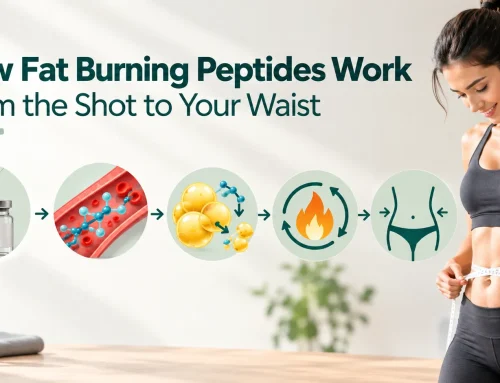
Walk down any skincare aisle and count the bottles with “peptide” on the front. Then open your phone, and a med spa somewhere is selling peptide shots for glowing skin. Somewhere between those two, peptide therapy for skin rejuvenation stopped meaning one thing.
We hear about it most at consultations. Someone pulls up a screenshot of a serum, or a video of a woman injecting something into her stomach, and asks whether it will firm her jawline. Fair question. The answer depends on which peptide she’s holding, how it gets into the skin, and whether her skin problem is the kind a peptide can touch at all.
So let’s sort them out, starting with what the word covers.
What Peptide Therapy for Skin Rejuvenation Means in Plain Terms
A peptide is a short chain of amino acids. Your body uses thousands of them as messengers, and a few of those messages tell skin cells to make collagen and elastin, the proteins behind firm, springy skin. Peptide therapy for skin rejuvenation tries to send more of those messages, either from a cream on the surface or from a shot under it.
Collagen production slows a little every year after your mid-twenties. Sun speeds that up. Look at the back of your hand and then the inside of your upper arm, and you can see what decades of light do to the same person’s skin.
Peptides can’t erase that. What they can do is nudge cells that have gotten lazy, and that nudge takes months to show.
Peptides also turn up in sports medicine and weight loss, which is part of why the word gets so muddy online. We wrote a separate piece on how peptides work across the body if you want the bigger picture, from tendon repair to appetite.
Three Kinds of Peptide Therapy Get Sold Under One Name
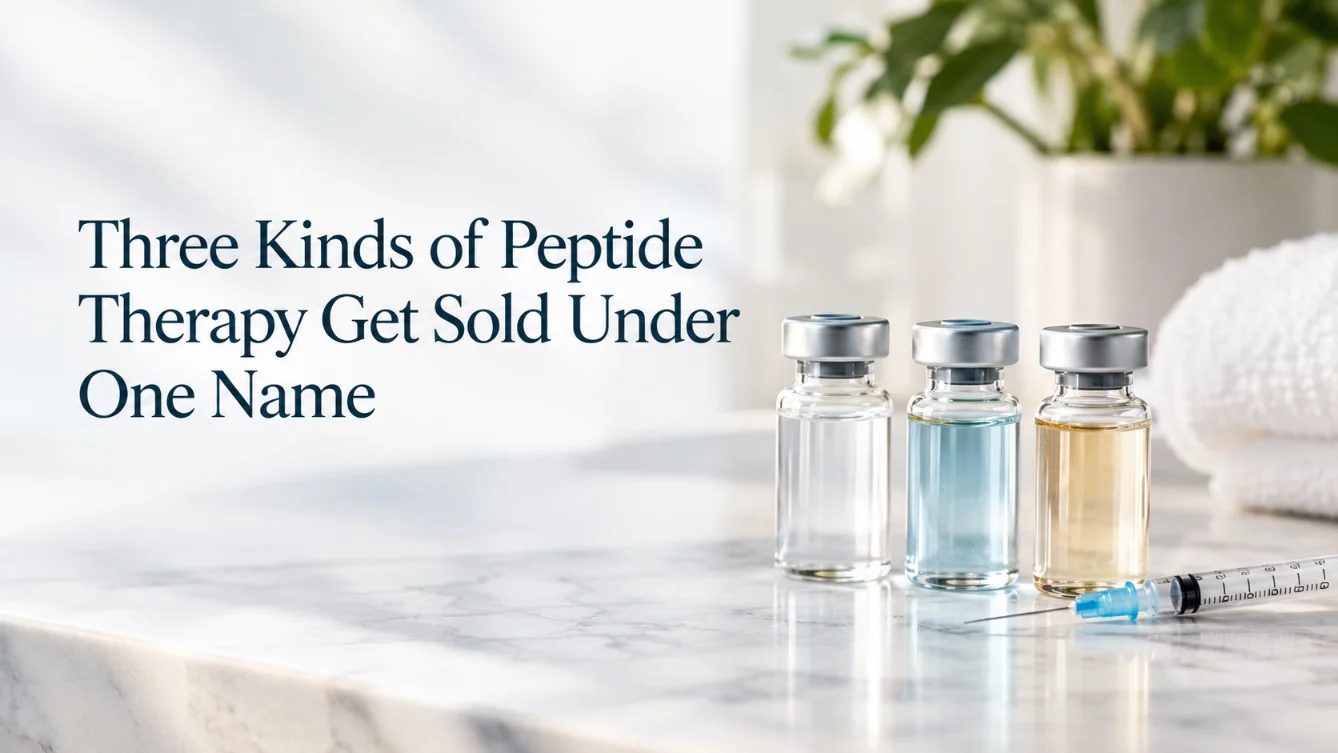
This is where most of the confusion starts. Three quite different products all get called peptide therapy, and an ad rarely tells you which one it’s selling.
The first is the serum or cream you buy and put on at home. The second is an injectable skin peptide, usually GHK-Cu, that some clinics and online shops sell as a shot. The third group, growth hormone peptides, isn’t aimed at skin. These act on the whole body, and any change in your face comes along as a side effect.
| Topical peptides | Injectable skin peptides | Growth hormone peptides | |
| Common names | Matrixyl, Argireline, copper peptides | GHK-Cu injections | Tesamorelin, ipamorelin |
| Main goal | Fine lines, firmness | Collagen and repair | Body composition, sleep |
| Skin effect | Direct but mild | Direct, less studied | Side benefit only |
| FDA status | Sold as cosmetics | Compounded, not approved | Compounded, not approved |
| At 901 Aesthetics | Not offered as a protocol | Not offered | Offered for fat loss |
GHK-Cu deserves a quick word because it’s everywhere right now. It’s a copper-carrying peptide your own blood contains, and it hands copper to the cells that build collagen. In serums it often tints the liquid a faint blue, and the label may call it copper tripeptide-1. Online, the same molecule gets sold in vials for injection, which is a very different proposition.
Our own peptide work lives in that third column. We use a tesamorelin and ipamorelin protocol for stubborn belly fat. A few people on it tell us their skin looks a bit firmer by month three, since growth hormone supports collagen. We count that as a perk. Nobody should start it for their face. And if a peptide ad never says which of these three columns it belongs to, ask before you pay a cent.
Which Skin Benefits Have Research Behind Them?
Collagen and fine lines. That’s where the evidence for peptide therapy for skin rejuvenation is strongest, and even there the gains are modest. A 2025 review in the journal Biomolecules called peptides promising anti-aging ingredients, then asked for bigger, longer trials before anyone calls the case closed.
The rest of the claims sit on a sliding scale.
Collagen and Fine Lines Have the Strongest Support
Matrixyl and similar signal peptides prompt skin cells to make more collagen. Copper peptides feed the enzymes that do the building. In controlled trials, people using these daily for a few months got smoother texture and slightly shallower lines, the kind of change you notice in a photo from last spring. Argireline works a bit differently and may soften expression lines a touch.
Firmness and Hydration Show Smaller Gains
Ads for peptides for wrinkles focus on lines, but the first thing most users report is comfort. Skin holds water better, flaky patches settle, and foundation stops creasing by three o’clock. Firmness lags. A NewYork-Presbyterian dermatologist points to trials showing better elasticity, while saying plainly that the research still has growing to do.
Acne and Inflammation Claims Remain Unsettled
Dermatologists don’t agree here. One at Cleveland Clinic describes certain peptides as anti-inflammatory. One at NewYork-Presbyterian says they aren’t, and that peptides won’t treat acne. If redness or breakouts brought you here, a proven acne plan comes first, and peptides can ride along later.
Why Peptide Serums Work Slowly on the Surface
Your skin’s outer layer exists to keep things out. Germs, pollution, and yes, the forty-dollar serum. Peptides are fairly large molecules, so only a small share slips through to the cells that make collagen.
That’s the main reason results take months. Formula matters too, and a few label habits help. We like seeing the peptide named early in the ingredient list, since products list ingredients from most to least. A bottle claiming six peptides that all show up after the fragrance probably holds very little of any of them. Airless pumps also keep the formula fresher than a jar you dip into every night.
Microneedling changes the math. SkinPen microneedling makes tiny channels in the skin, and products applied in that window reach deeper layers. Clinics sometimes pair needling with a peptide or growth factor serum for exactly that reason. The same channels let irritants in, so whatever touches freshly needled skin has to be sterile and made for the job. Your bathroom serum with a lovely rose scent isn’t it.
Take the serum past your jaw, too. The neck and the backs of the hands lose collagen as fast as the face, and almost nobody treats them until the contrast starts to show in photos.
Are Peptide Injections for Skin FDA Approved?
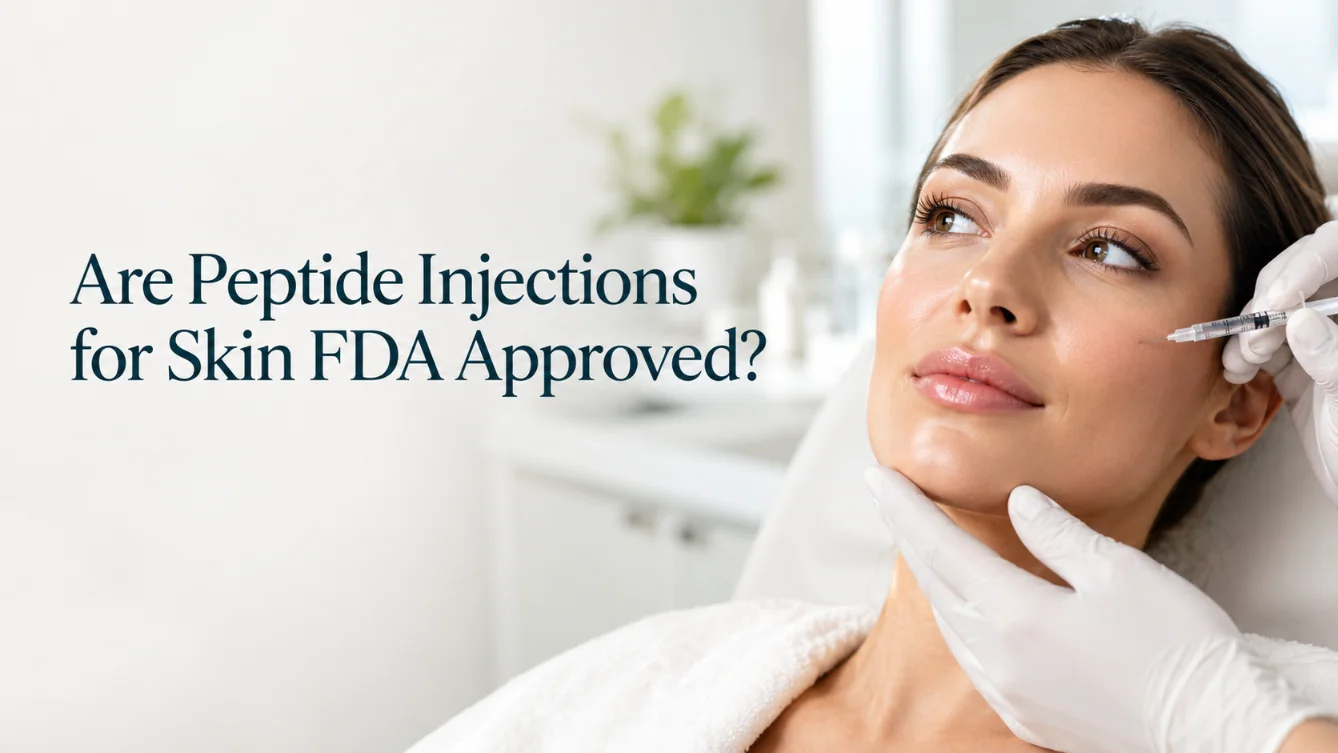
Almost none are. Most peptide injections for skin come from compounding pharmacies, which mix medication batch by batch for individual prescriptions. The FDA hasn’t reviewed those products for safety or effectiveness. Peptide creams sit in yet another category. The FDA treats them as cosmetics, and cosmetics don’t go through drug approval at all.
A compounding pharmacy can be licensed and inspected and still sell a product nobody has proven works. Oversight of how something gets mixed says nothing about long-term safety. This year an FDA advisory committee on compounding reviewed several peptide substances, and facial plastic surgeons were quick to remind patients that a review isn’t an approval.
Some peptide drugs do carry full approval, mostly for diabetes and weight loss. None is approved for skin rejuvenation. If a clinic calls its skin shot “FDA approved,” ask for the product name on the vial and look it up. Ask who signs the prescription, too, and who picks up the phone if your arm swells at ten at night.
We hold ourselves to the same standard. Our peptide page states that the peptides we use are manufactured, aren’t FDA-approved, and haven’t been reviewed by the FDA for safety or effectiveness. A physician directs our medical program, and we go over your history and labs before anyone gets a vial. Any clinic that skips the talk about topical vs injectable peptides owes you that conversation.
Peptides vs Retinol for Fine Lines
Retinol wins on track record. Dermatologists have decades of studies showing it speeds cell turnover and builds collagen, and nothing in the peptide world comes close to that body of proof yet.
Peptides earn their spot with skin that can’t take retinol. We see it constantly. Someone tries a retinoid, peels for two weeks, and quits. A peptide serum gives that skin something to do while it toughens up. Pregnancy is another case. Most OBs ask patients to pause retinoids, and peptides make a reasonable stand-in, though it’s still worth running any new product past your doctor.
Plenty of routines use both. Peptides in the morning and retinol at night keeps the two from crowding each other, and sensitive skin can start with peptides alone and add retinol two or three nights a week.
Cost is the other half. A Cleveland Clinic dermatologist makes the point that a plain retinoid plus hyaluronic acid often does as much as a pricey peptide cream. And once good products stop moving the needle on lines and sun spots, our post on whether laser resurfacing is worth it picks up where the serum leaves off.
Sagging, Hollowing, and Deep Folds Need More Than Peptides
No serum lifts a jowl. When the jawline softens or the cheeks flatten, the change has happened in fat pads and deep collagen that a cream can’t reach. Peptides for skin tightening can support skin through that stage. They just can’t do the structural work.
A quick test helps us sort it out. Pinch the skin along your jaw and let go. If it snaps back, you’re probably looking at lost volume. If it tents and lingers, laxity is the bigger issue. Lauren McCann, MSN, RN, CRNA, checks for both at a consultation, because the fix for each one is different.
Loose Skin Along the Jaw and Neck
Radiofrequency microneedling pairs fine needles with heat aimed at the deeper skin layers. That heat tightens tissue and kicks off new collagen over the following months. Crepey neck skin and a blurring jawline respond well. Most plans run three to four sessions, about four weeks apart, and a gentle peptide serum fits in between once we clear it.
Hollow Cheeks and Thinning Skin
Sculptra rebuilds lost volume slowly, prompting your body to lay down collagen in hollow temples and flattened cheeks over several months. For thin, tired skin without much hollowing, PRP Bio Filler uses platelets from your own blood for a softer boost. Friends notice you look rested. They can’t point to a day it changed.
Can’t tell whether your skin needs volume or tightening? Book a consultation online and we’ll look at it with you.
What Happens to Your Skin After GLP-1 Weight Loss?
The face often loses fat faster than the skin can shrink to match. On semaglutide or tirzepatide, people can drop a lot of weight in a few months, and the cheeks and jawline show it first. Photos usually catch it before the mirror does.
The pattern is familiar to us by now. Cheeks flatten, the lines from nose to mouth deepen, and the skin under the chin starts to hang a little. Someone at work asks if you’ve been sleeping. Age plays a part, too. Skin at fifty-five bounces back more slowly than skin at thirty-five after the same loss.
Can peptides tighten loose skin after weight loss? On their own, not by much. A steady peptide routine with daily sunscreen keeps skin hydrated and better able to cope while your weight settles. True sagging and volume loss need the treatments in the section above.
Muscle loss is the other worry we hear from people coming off a GLP-1, especially as the dose drops. Our medical weight loss program works hand in hand with the peptide protocol for that stretch, so the whole plan stays under one roof.
How Long Peptides Take to Change Your Skin
Expect four to eight weeks before texture and hydration shift, and closer to three months for firmness and softer lines. Skip nights and that clock stretches.
Month one feels like nothing. Your skin turns over its surface every few weeks, more slowly with age, so early improvement sits underneath older cells until they shed. Plenty of people who quit a serum quit right here.
Photos help more than mirrors. Take one by the same window on day one and again at week twelve, same time of day, no makeup. Overhead bathroom bulbs deepen every line on the face, so they make a poor judge of progress. And resist swapping products every few weeks, because each switch restarts the count.
The growth hormone route runs on its own schedule. On our protocol, people tend to sleep better and feel more energetic by week three or four, and belly fat starts to shift between weeks eight and twelve. We don’t put a skin timeline on it. Firmer skin shows up for some people and not others.
Sunscreen decides how much of this you keep. UV light breaks collagen down faster than any peptide builds it, and long, humid summers make it tempting to skip on quick errands. A broad-spectrum SPF 30, reapplied at lunch when you’re outside, protects the work. Without it, even a perfect routine mostly treads water.

Side Effects and Who Should Wait Before Starting
Topical peptides rarely cause trouble. When they do, it’s usually mild redness or itching where you applied them, and the culprit is more often fragrance or a preservative than the peptide. Try a new product on a small patch along your jaw for three or four days before putting it on your whole face.
Growth hormone peptides come with more to watch. On our tesamorelin and ipamorelin protocol, some people feel puffy from water retention or have vivid dreams, and tesamorelin can make you a little hungrier.
A few situations call for waiting or getting a doctor’s okay first:
- Pregnancy or breastfeeding
- An active rosacea or eczema flare, which should calm down before you add anything new
- Skin still healing from a laser or peel
- Active cancer treatment, which rules out growth hormone peptides entirely since growth hormone encourages cell growth
- Blood sugar that runs high, because these peptides can push it higher still
Well-controlled diabetes isn’t an automatic no for the growth hormone route. It means closer monitoring and a blood sugar check between cycles. Thyroid conditions get the same treatment. Bring your latest labs and your medication list, and we’ll decide together whether to start now or wait.
Building a Peptide Plan With Skin Rejuvenation in Germantown TN
Good skin rejuvenation in Germantown TN starts with naming the actual problem, because a texture issue and a volume issue need different tools. Lauren McCann leads our team at 901 Aesthetics, and our Advanced Skin Analysis lets us see what’s going on under the surface before we suggest a thing.
Bring your current products in a bag. We go through them with you, flag the ones doing double duty, and point out the ones you can stop buying. Sometimes the plan ends up as one peptide serum and a better sunscreen. Other times it pairs home care with RF microneedling or Sculptra. Cherry financing and our monthly memberships can spread out the cost of in-office work.
Local voters named us the #1 Memphis Most MedSpa & Laser Center. Our medical spa in Germantown TN sits on Valley Crest Lane, an easy hop off Poplar Avenue with parking right outside, and clients come in from East Memphis, Collierville, Cordova, Bartlett, and across the state line from Olive Branch. When getting here doesn’t fit your week, ask about our mobile appointments, which bring many treatments to your home or office.
Is Your Skin Ready for More Than a Serum?
Back to that skincare aisle. Peptide therapy for skin rejuvenation has a fair place in a routine, as long as you know which kind is in the bottle and what it can realistically change.
If your skin needs structure rather than one more serum, Lauren and our team can show you the difference in a single visit. Curious what your skin will respond to? Call (901) 221-1256 to set up your skin consultation.
Frequently Asked Questions
Share This Story, Choose Your Platform!
Related Posts