Many people start their weight loss journey by adopting healthy lifestyle practices such as proper nutrition, calorie reduction, and exercise. But when they make considerable progress and continue with the same routine, at a certain stage, they may find that they are no longer losing weight despite their efforts. This is called a weight loss plateau.
While diet and exercise remain the foundation of healthy weight management, some people need extra support to overcome the biological changes that make progress harder. GLP-1 medications can help control appetite and increase fullness, which supports sustainable fat loss
At 901 Aesthetics in Germantown, TN, our medical weight loss programs help patients understand their challenges and explore personalized options, including peptide therapy, to support their weight loss goals.
Why Weight Loss Can Stall Despite Diet and Exercise
It may appear simple on paper to lose weight; all one has to do is eat fewer calories than he burns, and the numbers on his scale will come down. However, the body does not function like that for a prolonged period of time. With weight loss comes changes in calorie requirement. Hunger becomes more pronounced.
Metabolic Adaptation Reduces Progress Over Time
Energy balance is regulated by the body. As you lose weight, your body requires fewer calories since there is less body mass. In addition, the body uses its energy more efficiently. This process is referred to as metabolic adaptation. It was a survival mechanism for humans when food was scarce. Now it makes weight loss difficult.
Several changes happen during adaptation:
- Resting energy use drops
- Daily movement may decrease without noticing
- Hunger and fullness signals shift
- Hormone levels that control appetite adjust
Someone who lost weight eating 1,800 calories may later need fewer calories to keep losing. The same intake that worked at the start no longer creates the same deficit. This is one main reason plateaus appear after early success.
| Concept | Role in Weight Management |
|---|---|
| Metabolic adaptation | Body adjusts to lower calorie intake |
| Basal metabolic rate | Energy needed for basic functions at rest |
| Energy balance | Calories in versus calories used |
| Calorie deficit | Eating fewer calories than the body burns |
Medical weight loss looks at these biological shifts instead of only pushing harder restriction. Treatments that influence appetite and metabolism become useful when these adaptations take hold.
Hunger Hormones Make Appetite Harder to Control
Hunger increases following weight loss for many individuals. Hormones help determine when you feel hungry or full and how your body stores energy. After weight loss, these signals can work against further progress.
Ghrelin Raises Hunger Signals
The hunger hormone is called ghrelin. Ghrelin signals the brain that the body requires food. Following weight loss, the level of ghrelin increases. This results in increased hunger, food thoughts, and difficulty following low-calorie diet plans. There is an increased risk of regaining the weight lost.
Leptin Affects Fullness
Leptin is produced by fat cells and tells the brain that the body has enough stored energy. With reduction in body fat, the level of leptin usually falls. This reduces the feeling of satisfaction after eating. One may eat more despite intending to stick to the program.
GLP-1 Supports Appetite Control
GLP-1 is a hormone naturally secreted in the gut when eating. It plays a role in controlling appetite, digestion rate, and blood sugar. Therapies that stimulate the GLP-1 signaling pathway enhance these actions. They promote satiety and appetite suppression in many individuals.
| Hormone | Main Function |
|---|---|
| Ghrelin | Raises hunger signals |
| Leptin | Helps regulate fullness |
| Insulin | Controls blood glucose |
| GLP-1 | Supports appetite and digestion |
These hormone shifts show why weight management involves more than willpower. Biological signals drive eating behavior. When those signals work against progress, medical support can help restore balance.
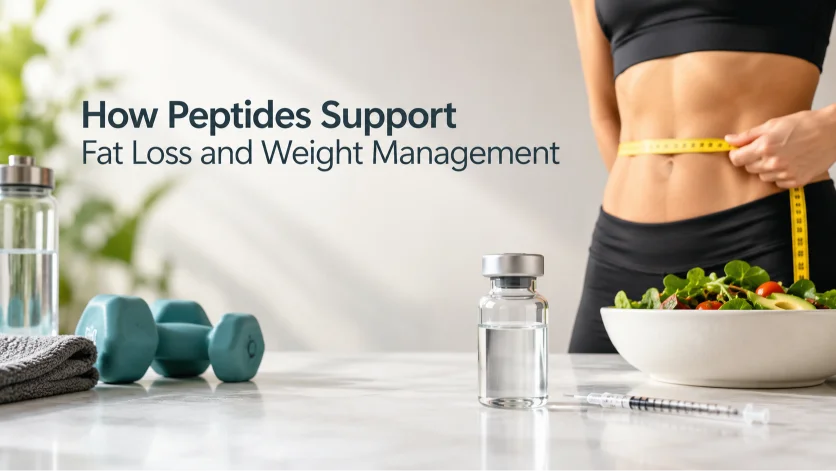
How Peptides Support Fat Loss and Weight Management
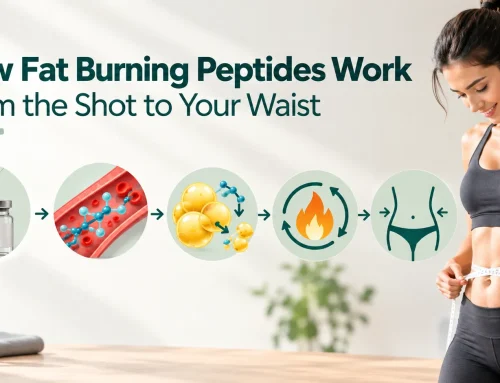
Peptides are small sequences of amino acids which serve as messengers in the body. They affect metabolism, hormones, and appetite. Regarding medical weight management, the most studied substances are GLP-1 receptor agonists and similar drugs. Their mechanism of action includes the replication of hormonal pathways which regulate hunger, food consumption, and glucose level.
The use of peptides for fat loss usually means these drugs. They are different from regular peptide supplements available on the Internet with poor evidence base. The point is to facilitate appetite regulation so that the person is able to adhere to diet and physical activity regimen.
GLP-1 Peptides Help Control Appetite and Food Intake
GLP-1 agonists work on pathways connected to the native GLP-1 hormone. The hormone increases in response to food intake and indicates that the body has had enough food. These drugs reinforce this effect.
They support weight management in several ways:
- Stronger feelings of fullness after meals
- Lower hunger signals between meals
- Better control over cravings
- Easier portion control
- Improved blood sugar response
Common medications include semaglutide, liraglutide, and tirzepatide. Tirzepatide also acts on GIP pathways. Many people assume the hardest part of weight loss is knowing what to eat. For many, the real challenge is constant hunger. GLP-1 therapies address that barrier. They still work best with solid nutrition and regular movement.
GLP-1 and GIP Pathways Support Metabolic Health
More recent therapies focus on multiple hormonal systems. Tirzepatide works on both GLP-1 and GIP receptors. GLP-1 regulates hunger and digestion, as well as glucose levels. GIP helps the body release insulin in response to food. Thus, these two pathways work together on metabolism.
Insulin sensitivity is essential for losing weight. It helps to move glucose from the bloodstream to cells to be used for energy. Better insulin sensitivity helps cells use glucose more effectively. Glucagon, a hormone that signals the liver to release stored glucose, also plays a role in blood sugar balance. Glucagon is a hormone that makes the liver release its glucose stores when necessary.
Peptides Support Fat Loss While Protecting Body Composition
The success of weight loss goes beyond a reduction in body weight. Body composition is crucial in weight loss. Body composition refers to the ratio of fat tissue, muscle mass, and other body components. Some weight loss is attributed to muscle loss when protein and workouts are neglected.
Key factors that protect muscle during fat loss:
- Adequate protein each day
- Resistance training
- Consistent activity
- Medical guidance on dosing and progress
Peptide therapy can help reduce fat. Protecting muscle still requires attention to food and training. A complete approach targets both fat loss and healthy body composition.ex
| Goal | Why It Matters |
|---|---|
| Reduce excess body fat | Supports overall health |
| Preserve lean muscle | Maintains strength and metabolism |
| Improve eating patterns | Supports long-term results |
| Build sustainable habits |
People who have cycled through many diets often benefit from medical support plus lifestyle changes. This combination addresses both biology and daily habits.
Which Peptides and Medications Are Used for Weight Management?
Not all peptides work the same way. The best clinical evidence is seen in drugs affecting GLP-1 and its pathways. It is essential to go through the medical history, existing medical condition, previous efforts to lose weight, and objectives of treatment by a healthcare professional. This will determine whether the particular method should be used and monitored.
FDA-Approved GLP-1 Weight Loss Medications
GLP-1 receptor agonist drugs have been the most extensively studied for weight loss management. These drugs affect the pathways of natural GLP-1 hormone. People usually feel full even with small meals and have less hunger pangs.
Recognized options include:
- Wegovy (semaglutide) for chronic weight management
- Saxenda (liraglutide) for weight management
- Zepbound (tirzepatide) which targets both GLP-1 and GIP pathways
Ozempic and Mounjaro contain the same active ingredients but carry primary approvals for type 2 diabetes. Weight reduction is a common effect. The right choice depends on individual health needs and goals. A consultation determines the best fit. Understanding different GLP-1 treatment options and other peptide compounds is important when choosing a weight management approach.
Semaglutide for Weight Loss
Semaglutide mimics GLP-1. It promotes appetite management, which means that a lot of people do not have an overwhelming desire to eat too much. Hunger and food cravings are reduced. Glucose is managed properly as well. The medication alone will not lead to lasting effects. Nutrition and exercise are needed for muscle preservation and other effects.
Tirzepatide for Weight Loss
Tirzepatide acts on the GLP-1 and GIP receptors. This dual mechanism works to help control appetite and metabolism. Research has indicated that there is significant weight loss in a large number of patients who use this in conjunction with lifestyle changes. The effect varies based on patient’s weight and consistency.
Other Peptides Discussed for Body Composition
There are some peptides that are discussed in wellness circles as helping build muscles and hormone production. Examples include CJC-1295 and ipamorelin, which are intended to stimulate growth hormone release. Neither is FDA-approved for weight loss, and evidence for fat reduction is limited. They differ from GLP-1 medications approved by the FDA that help with weight loss. There is a weaker body of research on their impact on primary fat reduction. A professional can explain in detail the effectiveness of each treatment method.
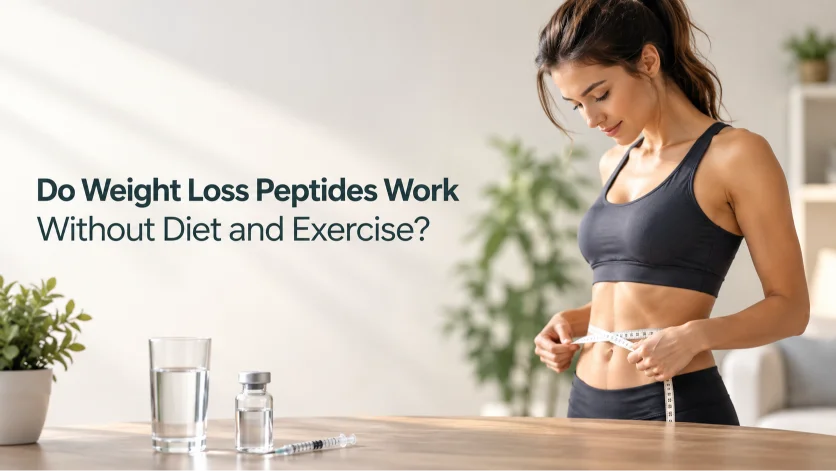
Do Weight Loss Peptides Work Without Diet and Exercise?
Weight-loss medications can support fat loss, and results are best when they are combined with a healthy lifestyle. They assist with regulation of appetite in order to follow the right nutrition program. They cannot replace the advantages offered by proper diet and physical training.
Nutrition Supports Healthy Fat Loss During Peptide Therapy
Reduced appetite can make it harder to eat enough protein and nutrients. The focus stays on better food choices, not only fewer calories. The body still needs protein to protect muscle. Fiber, healthy fats, and nutrient-dense meals support energy and recovery.
A balanced approach includes:
- High-quality protein sources
- Vegetables and fruits for fiber
- Healthy fats
- Meals matched to individual calorie needs
Nutrition guidance helps ensure weight loss improves body composition instead of simply lowering the scale number.
Exercise Helps Preserve Muscle During Weight Loss
Exercise is still necessary. Exercise involving resistance training will help your body retain muscles when you start losing fat. Resistance exercise helps maintain muscle mass and composition and also metabolism. Exercise also helps maintain proper insulin sensitivity and cardiac function. The combination of peptide treatment with a high-protein diet and resistance exercise gives you a complete approach.
What Results Can You Expect From Peptide Weight Loss Therapy?
Results vary from person to person, there are many factors to consider such as genetics, weight, habits, response to medication, and consistency. Some individuals report improved appetite management after a few weeks. The visible changes in weight and body composition will take several months as the dosage reaches an effective level. There is more to the outcome than weight.
At 901 Aesthetics, consultations focus on individual goals and a plan that supports steady, sustainable progress under medical care.
Safety Considerations Before Starting Peptide Therapy
All medical treatments need supervision from a professional. The practitioner analyzes health history and other considerations before suggesting peptide therapy. Semaglutide and tirzepatide are not suitable for people with certain thyroid cancer histories or during pregnancy, and they can cause serious issues such as pancreatitis or gallbladder problems. Your provider will review your history before prescribing Your provider may reduce side effects by adjusting the dose gradually and your diet.
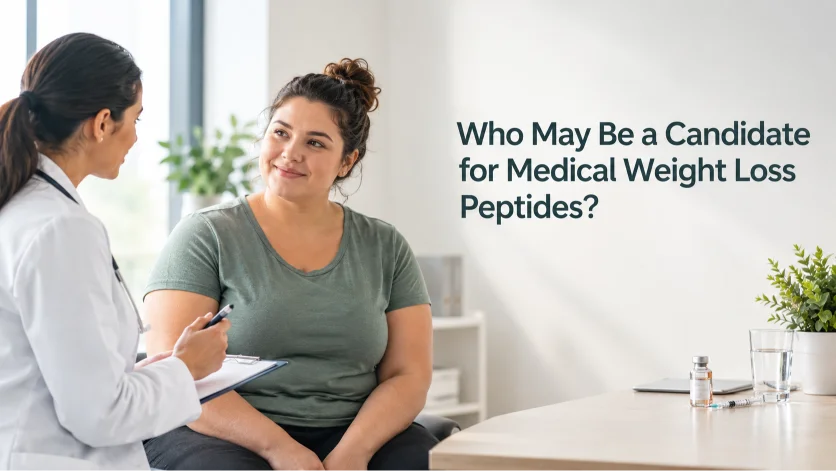
Who May Be a Candidate for Medical Weight Loss Peptides?
Approved weight-management medications are generally indicated for adults with a BMI of 30 or higher, or 27 or higher with a weight-related condition. Your provider will determine whether you qualify. A consultation can benefit people who:
- Face repeated weight loss stalls
- Struggle with strong appetite or cravings
- Have weight-related health concerns
- Want added support alongside diet and exercise
Every situation differs. Medical history, past attempts, and personal goals guide the decision. At 901 Aesthetics, the process starts with understanding your goals and evaluating whether peptide therapy fits your health needs.
Maintaining Weight Loss After Peptide Therapy
Sustained success lies in the good habits established during the therapy period. Appetite support may reduce once medication is discontinued. Protein consumption, resistance training, and balanced eating continue to be key in sustaining the gains. Guidance and monitoring will be instrumental in transitioning from the active therapy phase to the maintenance phase. Weight loss is a gradual process.
Conclusion: Peptides Can Support Fat Loss With the Right Medical Approach
Some people maintain a routine of diet and exercise, they may run into biological obstacles. Hormonal and metabolic issues may hinder the process. Peptides like GLP-1 and dual agonist peptides, which have received approval from the FDA, can help regulate these factors that may not be fixed solely through lifestyle interventions. This therapy should always be used in combination with proper nutrition and strength training programs.
If you have reached a plateau or want to explore medical weight management options, 901 Aesthetics in Germantown, TN offers personalized consultations. We review your history, discuss realistic options, and build a plan focused on safer, longer-lasting progress. Call (901) 221-1256 or visit 9057 Valley Crest Lane, Unit 101, Germantown, TN 38138 to schedule your consultation.
Share This Story, Choose Your Platform!
Related Posts